NFL Officiating Under New CBA: Competition and Pressure Take Center Stage

PRONOS.CLUB
June 20, 2026 · 44 views
A New Era for NFL Officiating
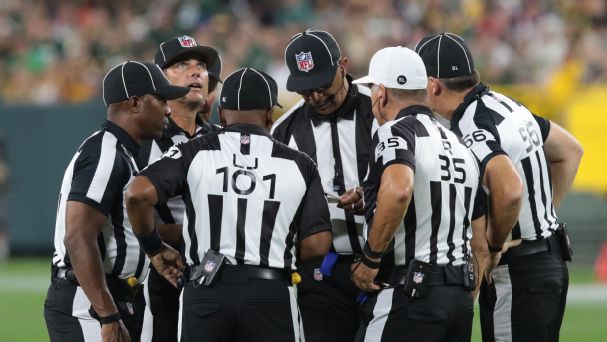
The new collective bargaining agreement for NFL referees marks a significant shift in how the league manages its officiating personnel. This agreement introduces a more competitive system where officials must justify their selection for major assignments, particularly playoff games. This fundamental change in power dynamics creates unprecedented pressure on the decision-makers on the field and directly impacts the consistency of game management.
Increased Competition: A Double-Edged Sword
While competition typically drives quality improvements, this system forces officials to remain constantly under scrutiny. This added pressure could paradoxically affect confidence and stability in arbitration decisions. Referees who must be constantly evaluated risk making less assured decisions or overcorrecting to demonstrate competence. This psychological tension is a factor often underestimated by traditional sports analysts but crucial for understanding officiating patterns and their impact on game flow.
Historical Officiating Patterns and Seasonal Trends
Previous seasons have demonstrated that individual referees maintain consistent patterns in penalty calls and rule interpretations. With this new structure, increased variability in the quality and frequency of penalties is expected depending on the specific officials assigned. This unpredictability creates an additional layer of complexity for sports analysis professionals who previously relied on stable historical officiating data for their models and predictions.
Direct Implications for Betting Markets
For bettors following penalty total markets (over/under on penalty counts), this officiating shift presents both risks and opportunities. Historical statistics become less predictive of future outcomes. Monitoring officiating crew performance during early season games becomes essential to identify emerging trends. Matches featuring newer or probationary referees may show different penalty frequency patterns, creating value in secondary markets often overlooked by mainstream bettors seeking larger exposure.
Adapted Strategies for Informed Bettors
Handicappers must evolve their methodologies by treating the officiating factor as a dynamic rather than static variable. Tracking referee assignments becomes critical to building accurate prediction models. Point spreads and totals may be slightly miscalibrated early in the season, offering opportunities for those identifying market inefficiencies. Favoring matchups involving teams with strong discipline records (lower penalty counts) could prove profitable in this context of increased officiating uncertainty and variance.
Forward-Looking Outlook and Required Vigilance
The new CBA for NFL officials tests a delicate balance: improving overall quality while maintaining game integrity. The early season weeks will be decisive for evaluating whether increased competition genuinely enhances officiating consistency or simply creates more volatility. Alert bettors who rapidly adapt their analytical models will gain significant advantages over a market temporarily disoriented by these important structural changes to the officiating ecosystem.