Gabriel red card debate: Did VAR get it right in Arsenal vs Man City clash?

PRONOS.CLUB
April 19, 2026 · 119 views
A controversial moment in a heavyweight clash
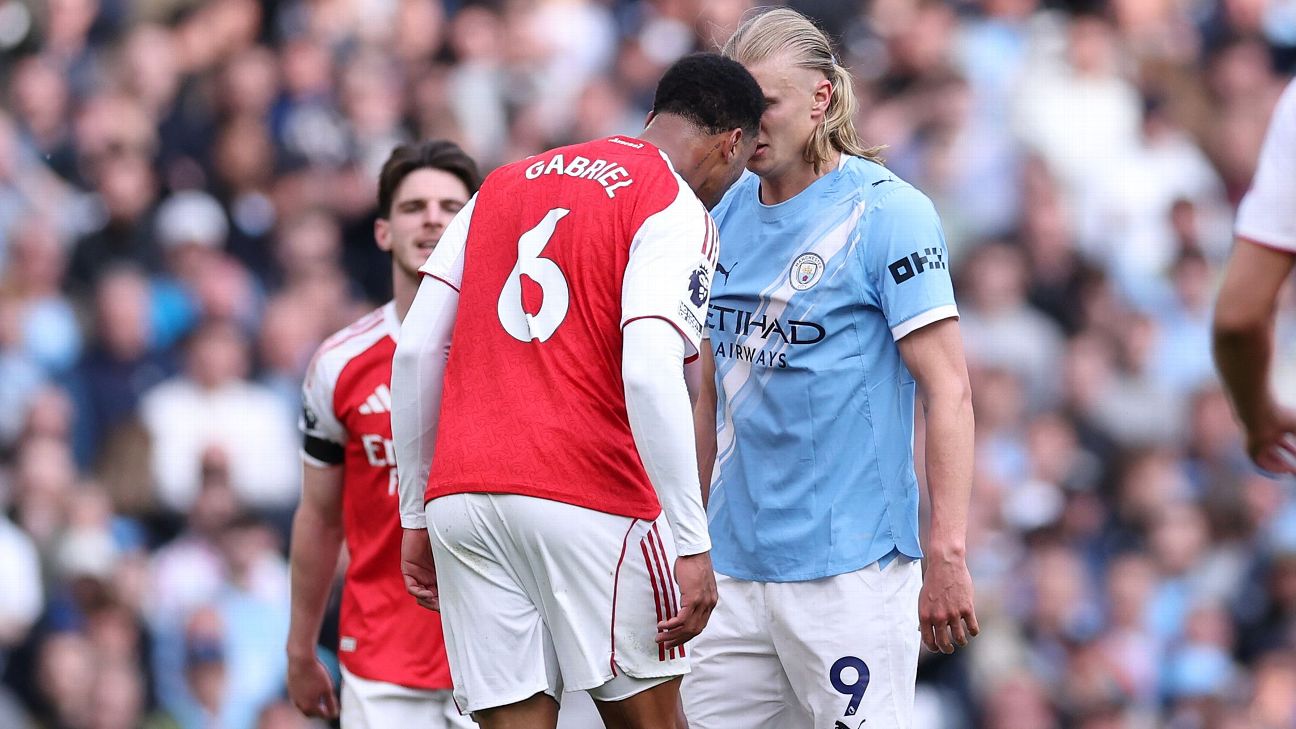
The Premier League showdown between Arsenal and Manchester City featured a heated incident involving defender Gabriel and striker Erling Haaland. Following physical contact between the two players, VAR maintained the initial yellow card decision rather than recommending a red. This decision immediately sparked debate among football analysts and sports betting experts, with observers divided on whether the incident met the threshold for direct expulsion under strict regulatory interpretation.
Technical analysis and regulatory framework
The incident's classification proves critical for bettors monitoring this fixture. Gabriel and Haaland's contact exists in regulatory gray territory—aggressive enough to warrant caution but assessed by VAR as insufficient for dismissal. This interpretive ambiguity reflects ongoing challenges in distinguishing between match intensity and disciplinary violations. For pronostic specialists, such marginal decisions directly shape tactical evolution and team dynamics during subsequent phases. Understanding where referees draw these boundary lines becomes essential for betting strategy optimization.
Match balance and betting strategy implications
An expulsion would have fundamentally altered the contest's trajectory, leaving Arsenal with numerical disadvantage during extended periods. This scenario would have presented clear opportunities for bettors anticipating City dominance with full personnel availability. Gabriel's continuation on the pitch preserves competitive equilibrium and complicates pre-match analyses premised on extended defensive absences. Markets tracking card accumulation and ejections remain highly sensitive to such arbitration outcomes.
Value considerations in specialized betting markets
This VAR dispute raises significant concerns for bettors focusing on disciplinary markets. Odds concerning total yellow and red cards fluctuate directly with observed refereeing tendencies. Should arbiters apply permissive interpretations toward physical contact in high-intensity matches, bettors targeting elevated card totals face consistent disappointment. Conversely, those favoring strict rule enforcement must reassess after each specific situation. Historical data between these clubs reveals consistently high discipline rates, making this context particularly relevant for advanced pronostiqueurs.
Future perspectives for sports bettors
Gabriel's situation exemplifies a persistent challenge in contemporary sports betting: the impossibility of predicting marginal refereeing decisions with certainty. Despite VAR's integration, officials retain substantial interpretive discretion. Successful pronostic specialists must study individual VAR official patterns and analyze how match context—emotional intensity, competitive stakes—shapes critical calls. This incident underscores the importance of disciplined bankroll management and tactical flexibility when confronting sport's uncontrollable variables.