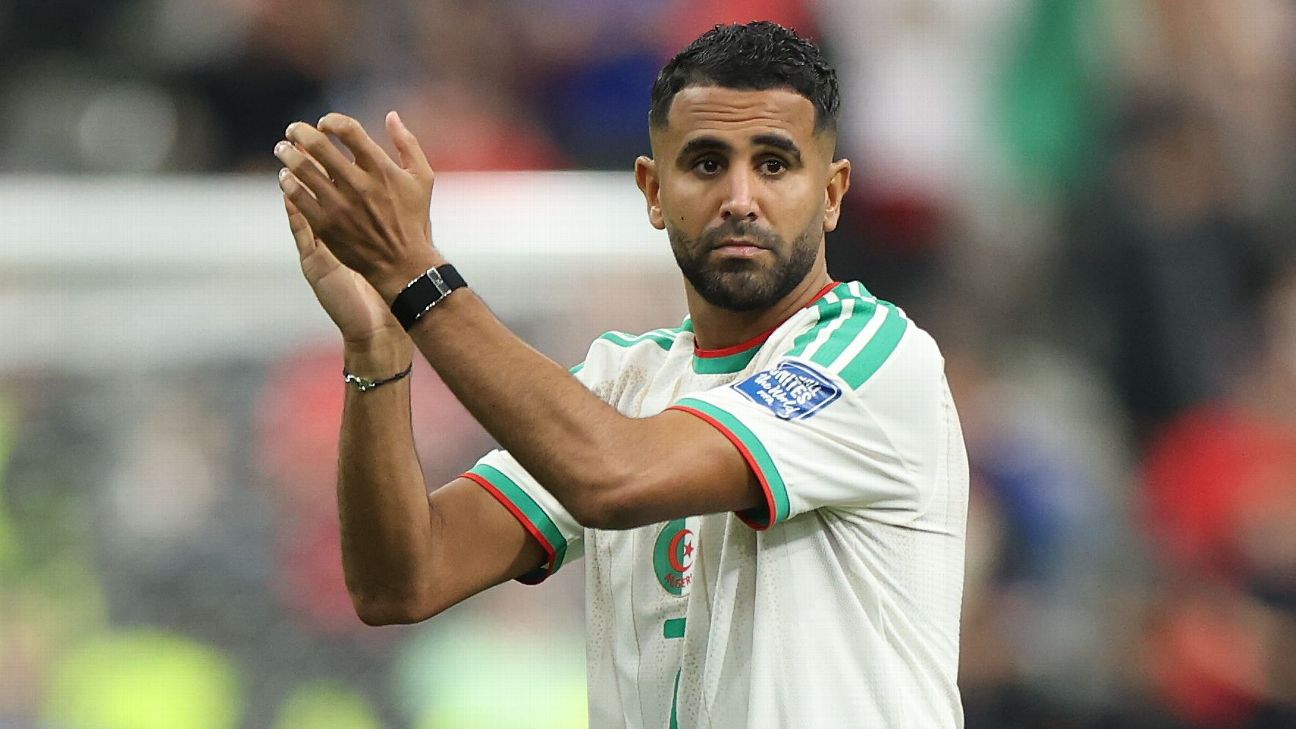
Mahrez retires from international duty following Algeria's World Cup exit

PRONOS.CLUB
July 3, 2026 · 47 views
A Strategic Departure at a Moment of Major Disappointment
Riyad Mahrez announces his withdrawal from the international stage following Algeria's brutal elimination in the World Cup Round of 32, crushed 2-0 by Switzerland. For Manchester City's winger, this early exit from the competition marks a turning point: after years as a cornerstone of the Algerian project, he chooses to end his international adventure on a difficult note, preferring to concentrate on his club career where he remains a major element of his team.
The context of this retirement is particularly instructive for bettors. Mahrez, despite his recognized status as a leader in the national team, was unable to lead Algeria deeper into the tournament. This elimination reveals structural fragilities in the Algerian team, far beyond just the offensive contribution of the international player. Performance data shows a team exposed defensively and lacking depth—crucial elements for progressing in a world competition.
Impact on International Betting Markets
This retirement directly affects several betting lines. First, future odds regarding African qualifiers for the 2026 World Cup must be readjusted: without Mahrez, Algeria's creative capacity diminishes significantly. Attentive bettors should monitor the evolution of odds on Algerian victories in qualifiers, where one can anticipate increased offensive deficits. Additionally, opposing selections will logically see their chances increase when facing Algeria.
Beyond Algeria, this decision also reconfigures betting markets focused on African continental competitions. The AFCON 2025 Qualifiers and beyond lose an experienced, world-class attacker. Analysts must now integrate this absence into their predictive models for North Africa. This is an opportunity window to identify value on competing selections that indirectly benefit from this Algerian weakening.
Perspectives and Long-Term Trends
This retirement fits into a broader trend: stars from major European leagues progressively retiring from national teams after World Cup disappointments. Mahrez chooses to prioritize his brilliant Premier League trajectory rather than extend an international quest that has become less probable at a personal level. For bettors, this confirms a golden rule: monitor the psychological engagement of international stars, as it strongly determines the winning probabilities of their respective teams.
In conclusion, Mahrez's departure redraws the contours of betting on African football and Algerian national team competitions. Savvy bettors must adjust their strategies by accounting for this absence and explore new opportunities generated by the rebalancing of forces within the Algerian team and its competitive continental environment.